
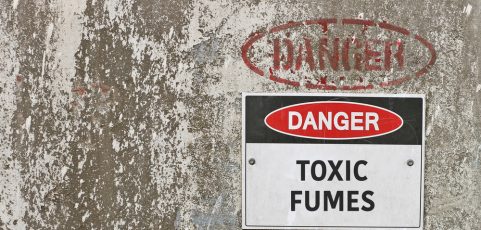
Every manufacturing industry, from oil and gas to chemical production, deals with various types of toxic gas. Mitigating exposure to these dangerous gases is essential to protecting employees. Depending on the concentration and environment, toxic gases can be corrosive, flammable, and highly lethal. For your safety, make sure you adequately understand the severity of the toxic gases in your vicinity by reviewing relevant MSDS or SDS documents.
How many of these toxic gases do you deal with on a regular basis? Learn the facts behind the most common types of harmful gases here.
Common Types of Harmful Gases
Experts have defined a toxic gas as “one which is capable of causing damage to living tissues, impairment of the central nervous system, severe illness or, in extreme cases, death when it is ingested, inhaled, or absorbed by the skin or eyes.”
Depending on your industry, you may come into contact with numerous harmful gases on a daily basis. Examine the health effects of the following five common toxic gases:
- Hydrogen Sulfide
- Carbon Monoxide
- Nitrogen Oxides
- Ozone
- Solvents
1) Hydrogen Sulfide
Primarily identified by its “rotten egg” smell, hydrogen sulfide (H2S) is found in a number of manufacturing processes and chemical substances. Products such as pesticides, plastics, pharmaceuticals, landfills, and even breweries emit hydrogen sulfide as a byproduct. Inhalation of high concentrations of H2S can result in irritation, unconsciousness, memory loss, or in severe cases, instant death.
Severity Level: OSHA currently recommends a 10-minute ceiling level of 10 ppm for workers. In addition, 100 ppm of H2S exposure has been proven to have immediate lethal consequences, making it highly toxic, even at these low concentration levels.
Pro Tip: Install an H2S gas detector to monitor specific levels of H2S concentration in your vicinity, no matter what other gases may be present.
2) Carbon Monoxide
Generally found in industrial processes as a source of energy and reducing agent, carbon monoxide (CO) is a tasteless, odorless, and colorless gas. Carbon Monoxide is created during incomplete burning of hydrocarbons. Health effects from carbon monoxide exposure can be nausea, restlessness, euphoria, and death when exposed to high concentrations or lower concentrations over a longer period.
Severity Level: OSHA currently recommends 50 ppm for workers during an 8-hour time period. Concentration levels beyond 200 ppm are considered highly dangerous.
3) Nitrogen Oxides
Nitrogen oxides encompass different gases, with nitric oxide and nitrogen dioxide being the two most common forms. Found in several consumer and industrial environments, nitrogen oxides are the main contributor of air pollution and reduced air quality. Nitric oxide is often emitted from vehicles, agricultural processes or as a byproduct of combustible fossil fuels, and nitrogen dioxide has been used in the production of rocket fuels and explosives. According to the CDC, health effects vary from eye, skin, and respiratory tract irritation to death at high concentrations.
Severity Level: Health officials are constantly trying to find ways to limit exposure to nitrogen oxides. The current permissible limit for nitric oxide is 25 ppm within an 8-hour work shift, with 100 ppm as the lethal limit. Comparatively, nitrogen dioxide has a 5 ppm permissible limit and 20 ppm lethal concentration limit.
4) Ozone
Especially toxic to plant life and humans, ozone is a gas made up of three oxygen atoms (O3) and is usually seen as widespread smog across cityscapes. While it may occur naturally in the upper layer of the atmosphere, chemical reactions resulting from vehicle exhaust or gasoline vapors contribute to large ozone concentrations at ground level.
Severity Level: According to OSHA, ozone levels should never exceed the following average: 0.10 ppm (parts per million) for 8 hours per day exposure. Extreme caution must be administered when working near ozone for an extended period.
5) Solvents
In addition to being highly flammable, the properties of organic solvents are highly toxic. Organic solvents are carbon-based substances capable of dissolving or dispersing one or more other substances. Solvents usually found in kerosene, gasoline, paint strippers, and degreasers are highly flammable and at lower concentrations, can affect your central nervous system. Other side effects such as dizziness, drowsiness, lack of concentration, confusion, headaches, coma, and death can be experienced during long term exposure of solvents.
Severity Level: Due to the various forms of solvents used on a daily basis, OSHA has published individual guidelines for every toxic chemical gas that has been identified. Review the standards of the toxic gases you may encounter to protect your health.
Protecting Your Health
When the health of your employees is at risk, measures must be put in place to ensure safe working conditions. GDS Corp offers a wide range of electrochemical and photoionization (PID) detectors that can detect the presence of toxic gases at very low levels. Equip your facility with proven hardware to protect your most valuable assets: your employees.
Connect with our gas safety experts to find the best detection system for your facility.